
Rôto dòng liên tục
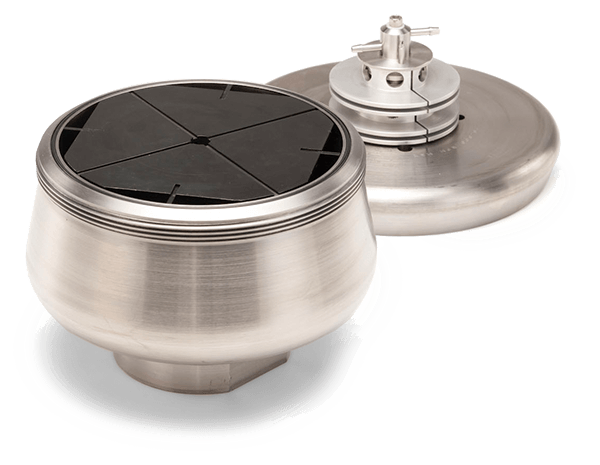
Rôto dòng liên tục cho phép ly tâm khối lượng lớn vật liệu ở lực ly tâm cao mà không cần phải làm đầy và lắng gạn nhiều ống ly tâm, hoặc thường xuyên khởi động và dừng rôto. Khi sử dụng rôto này, bạn có thể thu gom chất nổi trên bề mặt hoặc loại bỏ hạt ở đáy. Rôto dòng liên tục giảm đáng kể thời gian xử lý vật liệu vì 2 lý do:
- Chúng có chiều dài đường đi ngắn để giảm thời gian tạo hạt nói chung.Do đó, chúng tạo ra các hạt rắn một cách hiệu quả từ dòng mẫu và tạo điều kiện cho dòng chảy nhanh của vật liệu qua rôto.
- Chúng có dung tích lớn. Do đó, chúng không cần khởi động và dừng thường xuyên như các rôto thông thường. Điều này giúp tiết kiệm thời gian bằng cách giảm xử lý mẫu và giảm thời gian vô ích khi chờ tăng tốc/giảm tốc rôto giữa các lần chạy.
Các ứng dụng chính cho rôto dòng liên tục bao gồm: thu virus lớn, ty lạp thể, dịch treo mô đồng thể, vi khuẩn, tế bào và tảo. Tốt nhất là sử dụng rôto dòng liên tục nếu:
- Hệ số lắng của các tiểu phân cần thu gom lớn hơn 50 S. Do rôto có hiệu suất tạo hạt cao nên vật liệu rắn có thể được tách ra khỏi môi trường lỏng nhanh hơn so với rôto văng hoặc rôto góc cố định.
- TTỷ lệ chất rắn/chất lỏng trong mẫu thấp (5–15%). Ở tỷ lệ chất rắn/chất lỏng trên 15%, rôto có xu hướng vượt quá hiệu suất cần thiết, tức là, nó tạo hạt nhanh đến mức sẽ bị làm đầy ngay lập tức.Điều này có nghĩa là phải dừng rôto lại để thu các viên quá thường xuyên đến mức mất quá nhiều thời gian vào việc tăng tốc/giảm tốc rôto và làm sạch giữa các lần chạy. Ngược lại, nếu mẫu chứa ít vật liệu rắn, rôto sẽ hoạt động trong thời gian dài, xử lý khối lượng vật liệu lớn giữa các lần tắt máy.
Nhấp vào đây để xem New Intellifuge Calculator hoạt động.
FAQ Continuous Flow Centrifuge Rotors
What types of samples can be processed with continuous flow rotors?
Continuous flow rotors can be used for cell cultures, microbial suspensions, viral preparations, fermentation broths, tissue homogenates and other biological samples that require large-volume processing and particle recovery.
Why are continuous flow rotors used for large-scale centrifugation?
Continuous flow rotors help eliminate many of the inefficiencies associated with repeated batch processing. By allowing continuous sample loading and processing, they can significantly improve throughput when handling large sample volumes.
How does a continuous flow centrifuge work?
In a continuous flow centrifuge, the sample is continuously fed into the spinning rotor while clarified liquid exits the system. Particles with sufficient sedimentation properties are retained and concentrated within the rotor, allowing large sample volumes to be processed efficiently.
Why are continuous flow rotors advantageous for dilute samples?
Samples with low solid concentrations allow the rotor to operate for extended periods before unloading is required. This enables continuous processing of large volumes, making the workflow more efficient and reducing downtime.
When should a continuous flow rotor be used?
A continuous flow rotor is best suited for processing large sample volumes that contain relatively low concentrations of solid particles. It is particularly effective when the particles have a sedimentation coefficient greater than 50 S, allowing rapid and efficient separation.
What happens if the solid concentration exceeds 15%?
When the solid-to-liquid ratio is above 15%, pellet formation can occur too quickly, causing the rotor to fill rapidly. This requires frequent stops for pellet removal and cleaning, reducing overall process efficiency due to repeated acceleration and deceleration cycles.
What are the advantages of continuous flow centrifugation?
Continuous flow centrifugation can reduce sample handling, improve throughput, minimize downtime between runs and support efficient processing of large-volume samples. These advantages make continuous flow rotors valuable for scale-up and production-oriented centrifugation workflows.
What is the difference between a continuous flow rotor and a standard centrifuge rotor?
Standard centrifuge rotors process samples in discrete batches using individual tubes or bottles. Continuous flow rotors allow material to be processed continuously while the rotor remains in operation, making them better suited for large-scale centrifugation and high-throughput workflows.
Why is a continuous flow rotor recommended for particles with a sedimentation coefficient above 50 S?
Continuous flow rotors have very high pelleting efficiency. For particles with sedimentation coefficients greater than 50 S, they can separate solids from liquids more quickly than fixed-angle or swinging-bucket rotors, improving throughput and reducing processing time.
What is a continuous flow rotor?
A continuous flow rotor is a centrifuge rotor that allows samples to be continuously introduced and processed while the rotor remains in operation. This design enables efficient processing of large sample volumes without the need for repeated centrifuge tube loading and unloading.
What applications are continuous flow rotors commonly used for?
Continuous flow rotors are commonly used for large-scale cell harvesting, bacterial and yeast culture processing, virus purification, cell culture clarification, and concentration of biological particles from large liquid volumes.
What is the ideal solid-to-liquid ratio for a continuous flow rotor?
A continuous flow rotor performs best when the sample contains approximately 5% to 15% solids. Within this range, the rotor can process large volumes efficiently without requiring frequent interruptions.
