
Máy đếm, máy định cỡ và máy phân tích môi trường tế bào
Từ khi MÁY ĐẾM COULTER được phát minh vào năm 1954, chúng tôi đã xây dựng một dòng sản phẩm đổi mới, đầy đủ giúp tinh giản các hệ thống đếm, định cỡ, phân tích khả năng sống của tế bào cũng như giám sát nuôi cấy tế bào - nhờ đó mở ra những khả năng mới cho bạn trong lĩnh vực khoa học đời sống.
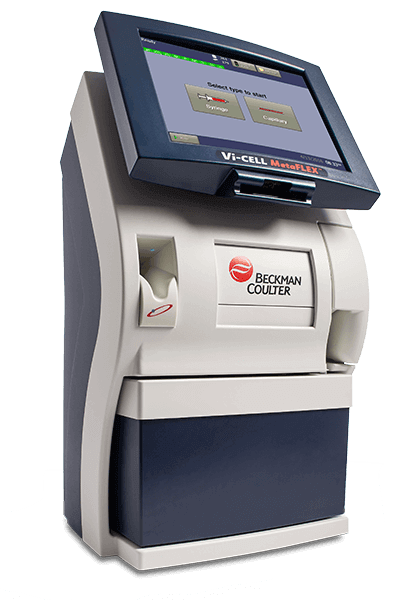
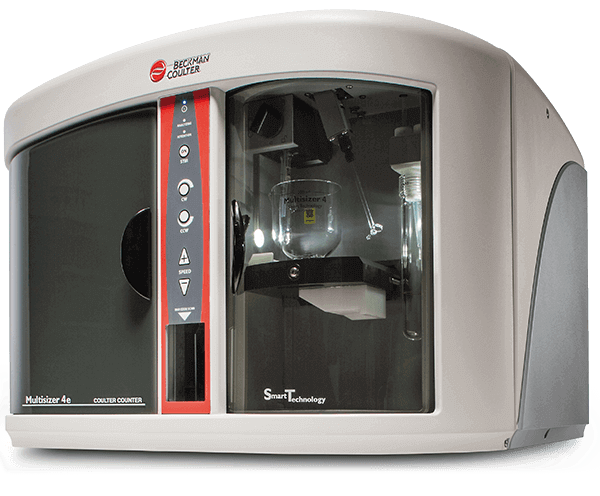
Mọi giải pháp chúng tôi tạo ra đều bắt đầu từ bạn và hiệu suất, độ chính xác và hiệu quả quy trình công việc mà bạn cần. Kỹ thuật đáng tin cậy được xây dựng để bạn có thể tin tưởng vào thiết bị của mình nhằm đáp ứng nhu cầu phòng thí nghiệm của bạn theo thời gian. Chúng tôi liên tục đưa ra cải tiến mới nhằm cải thiện quy trình công việc của bạn đạt đến đỉnh cao nhất trong một dòng máy đếm tế bào hoàn chỉnh bao gồm nền tảng phân tích khả năng sống của tế bào Vi-CELL và máy phân tích kích thước hạt Multisizer 4e.
Mỗi máy đều có một cách tiếp cận khác nhau để giúp bạn đếm, định cỡ và giám sát sức khỏe tế bào, với công nghệ tinh vi hàng đầu trong ngành. Đây là những nền tảng mạnh mẽ, đa năng và chính xác, nhưng vẫn thân thiện với người dùng và trực quan một cách hoàn hảo. Vì vậy, cho dù bạn đang tìm kiếm một khả năng tự động hóa hoàn toàn, kết quả chuyên sâu, hay chỉ đơn giản là mức độ tin cậy chưa từng có trong ngành, bạn chắc chắn sẽ có một giải pháp đáp ứng nhu cầu của mình.

FAQ on Cell Counters, Sizers and Media Analyzers
What is a Coulter Counter?
A Coulter Counter counts and sizes particles suspended in an electrically conductive liquid by measuring changes in electrical impedance as individual particles pass through an aperture. Each detected pulse represents a particle event, while pulse amplitude is proportional to the volume of electrolyte displaced by the particle. When the analyzed sample volume is known, the measurements can also be used to determine particle concentration. The Multisizer 4e Coulter Counter applies this method to individual-particle counting and sizing.
The Coulter Principle is used to count and size particles suspended in an electrically conductive liquid. As particles pass individually through an aperture between two electrodes, each particle displaces electrolyte and produces a temporary change in electrical impedance. The number of pulses corresponds to the number of detected particles, and the amplitude of each pulse is proportional to particle volume. These data can be used to calculate particle size distribution and concentration.
When should a Coulter Counter be used instead of flow cytometry?
A Coulter Counter is appropriate when the primary objectives are to determine individual-particle count, concentration and volume-based size distribution without relying on fluorescent labels or particle optical properties. Samples must be suspended in an electrically conductive liquid and matched with an appropriate aperture.
Flow cytometry may be more appropriate when the study requires fluorescence-based identification, biomarker expression data or differentiation of populations using multiple optical parameters. Method selection should be based on the required information, sample characteristics and analytical workflow.
What factors can influence cell viability measurements?
Cell viability results can be affected by sample handling, incubation conditions, reagent selection, timing of analysis, and cell type. Standardized protocols help improve consistency and ensure reliable viability assessments across experiments.
